Creating a new website can be fun, but ensuring it ranks well in Google may be tricky. Website developers usually pay attention to keyword research and backlink building while forgetting about an extremely crucial ranking factor – E-E-A-T.
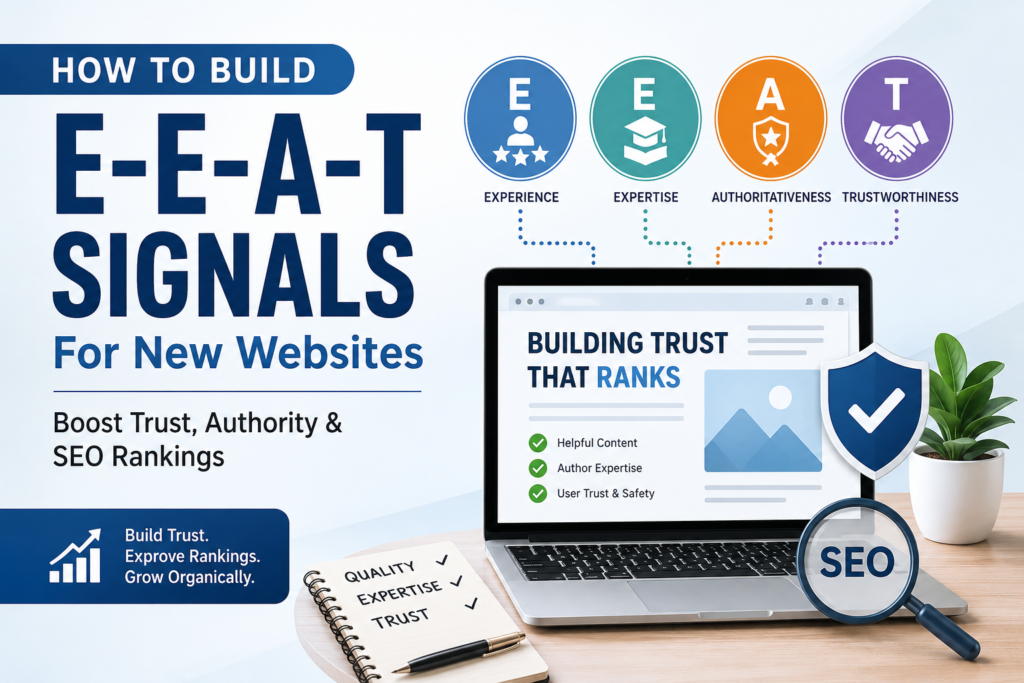
E-E-A-T means Experience, Expertise, Authoritativeness, and Trustworthiness. Even though it is not used as a ranking signal directly by Google, it helps to assess the credibility of the content and determine its appropriateness for search results. The websites which possess good E-E-A-T get higher positions, become more trustworthy, and have better SEO results.
Don’t despair if you have just created your website, and it doesn’t have any authority yet. There is no need to wait for a long time before you will become credible; you need just the right strategies to build trust among search engines and visitors right away.
This guide will show how to create good E-E-A-T signals and thus improve your SEO and get more traffic.
What is E-E-A-T?
E-E-A-T is part of Google’s Search Quality Evaluation Guidelines and helps assess content quality.
- Experience: Does the content reflect real-world experience?
- Expertise: Does the author have knowledge of the subject?
- Authoritativeness: Is the website recognized as a reliable source?
- Trustworthiness: Can users trust the website and its information?
Among these four, Trust is considered the most critical element.
Why E-E-A-T Matters for SEO
Although E-E-A-T isn’t a direct ranking signal, it influences many factors that impact rankings, including:
- Better user engagement
- Higher content quality
- Improved backlink opportunities
- Increased brand credibility
- Better conversion rates
- Higher chances of appearing in Google’s featured snippets
Google aims to provide users with reliable, accurate, and trustworthy information. Websites that demonstrate these qualities naturally perform better over time.
1. Create Helpful, Original Content
Quality content is the foundation of E-E-A-T.
Instead of rewriting what everyone else has published, create content that adds genuine value.
Focus on:
- Original research
- Step-by-step tutorials
- Case studies
- Industry insights
- Personal experiences
- Actionable tips
Ask yourself:
“Will someone leave this page knowing more than they did before?”
If the answer is yes, you’re moving in the right direction.
2. Demonstrate First-Hand Experience
Google added the first “E” (Experience) because real-world knowledge matters.
Include:
- Personal examples
- Screenshots
- Original images
- Campaign results
- Lessons learned
- Practical demonstrations
For example, instead of writing:
“SEO helps increase rankings.”
Write:
“We improved a client’s organic traffic by 85% in six months using topical clustering, content optimization, and internal linking.”
Real experiences build credibility.
3. Showcase Author Expertise
People trust people.
Every blog should include an author profile with:
- Full name
- Professional title
- Experience
- Certifications
- Industry achievements
- Social profiles
- LinkedIn profile
- Personal website (if available)
Also create a dedicated Author Page featuring:
- Biography
- Qualifications
- Published articles
- Areas of expertise
This helps both users and Google understand who created the content.
4. Build a Strong About Us Page
Many new websites ignore their About page.
An effective About page should include:
- Company story
- Mission
- Team members
- Years of experience
- Awards
- Certifications
- Office location
- Contact information
A transparent business appears far more trustworthy.
5. Add Trust Signals Across Your Website
Trust signals improve user confidence.
Include:
- HTTPS security
- Privacy Policy
- Terms & Conditions
- Refund Policy (if applicable)
- Contact page
- Business email
- Phone number
- Customer support details
- Secure payment badges
- Testimonials
These small elements collectively strengthen trustworthiness.
6. Earn High-Quality Backlinks
Authority grows when reputable websites mention yours.
Focus on:
- Guest posting
- Digital PR
- Industry directories
- Resource page outreach
- Expert interviews
- Podcast appearances
- Original research
- Infographics
Avoid buying low-quality backlinks, as they can negatively impact your SEO.
7. Collect Genuine Reviews and Testimonials
Positive reviews build credibility.
Encourage customers to leave reviews on:
- Google Business Profile
- Trustpilot
- Industry-specific review platforms
Also display verified testimonials on your website.
Include:
- Customer names
- Photos (with permission)
- Company names
- Case studies
Authenticity matters more than quantity.
8. Keep Content Fresh and Updated
Outdated information reduces trust.
Regularly:
- Update statistics
- Replace broken links
- Add new examples
- Refresh screenshots
- Improve outdated SEO practices
- Include recent algorithm updates
Displaying “Last Updated” dates also signals content freshness.
9. Cite Reliable Sources
Support factual claims with credible references.
Link to:
- Government websites
- Academic studies
- Official company blogs
- Industry reports
- Recognized organizations
Avoid relying on anonymous or unreliable sources.
Proper citations increase content credibility.
10. Improve Technical SEO
A trustworthy website should also provide a great user experience.
Optimize:
- Core Web Vitals
- Mobile responsiveness
- Page speed
- Internal linking
- Crawlability
- XML Sitemap
- Robots.txt
- Structured data
- Secure hosting
Technical excellence supports better rankings and user satisfaction.
11. Build Your Brand Authority
Google trusts recognizable brands.
Increase visibility through:
- LinkedIn publishing
- YouTube videos
- Webinars
- Podcasts
- Industry events
- Social media engagement
- Email newsletters
- Public speaking
- Community participation
The more your brand is mentioned online, the stronger your authority becomes.
12. Use Structured Data (Schema Markup)
Schema helps search engines understand your website.
Implement:
- Organization Schema
- Person Schema
- Article Schema
- FAQ Schema
- Breadcrumb Schema
- Review Schema (when appropriate)
Structured data enhances search visibility and supports E-E-A-T by providing clear context.
Common Mistakes That Hurt E-E-A-T
Avoid these common pitfalls:
- Publishing AI-generated content without editing
- No author information
- Thin or duplicate content
- Fake reviews
- Clickbait headlines
- Missing contact information
- Poor website security
- Outdated content
- Keyword stuffing
- Buying spammy backlinks
E-E-A-T Checklist for New Websites
Use this quick checklist before publishing:
✅ Original, helpful content
✅ Author bio included
✅ About page completed
✅ Contact information available
✅ HTTPS enabled
✅ Privacy Policy published
✅ Internal linking optimized
✅ Reliable sources cited
✅ Mobile-friendly design
✅ Fast loading speed
✅ Updated content
✅ Genuine customer reviews
✅ Quality backlinks earned
✅ Schema markup implemented
Final Thoughts
Constructing E-E-A-T is not about taking any shortcut to do so; it requires one to show value, credibility, and consistency in everything. One might not be able to have enough authority due to being new, but they can surely win Google’s trust through producing useful content, having true expertise, having excellent technical SEO and paying attention to the user experience.
Think of building something valuable, highlight your expertise, and be reliable at every stage. All these efforts will eventually make a difference in ranking and in your overall SEO.
E-E-A-T needs time and effort, and all those websites that invest in this will be successful in organic search.
Frequently Asked Questions (FAQs)
1. What does E-E-A-T stand for in SEO?
E-E-A-T stands for Experience, Expertise, Authoritativeness, and Trustworthiness. These quality signals help Google evaluate whether content is reliable and valuable for users.
2. Is E-E-A-T a direct Google ranking factor?
No. E-E-A-T is not a direct ranking factor, but it influences many signals that affect rankings, such as content quality, credibility, user trust, and backlinks.
3. How can a new website improve E-E-A-T?
A new website can improve E-E-A-T by publishing original content, showcasing author expertise, creating detailed About and Contact pages, earning quality backlinks, using HTTPS, collecting authentic reviews, and regularly updating content.
4. Does AI-generated content affect E-E-A-T?
AI-generated content isn’t automatically penalized. However, content should be reviewed, fact-checked, edited, and enhanced with human expertise and original insights to meet Google’s quality expectations.
5. How long does it take to build E-E-A-T?
Building strong E-E-A-T is an ongoing process. Depending on your niche, competition, and content quality, noticeable improvements in authority and search visibility may take several months to over a year.