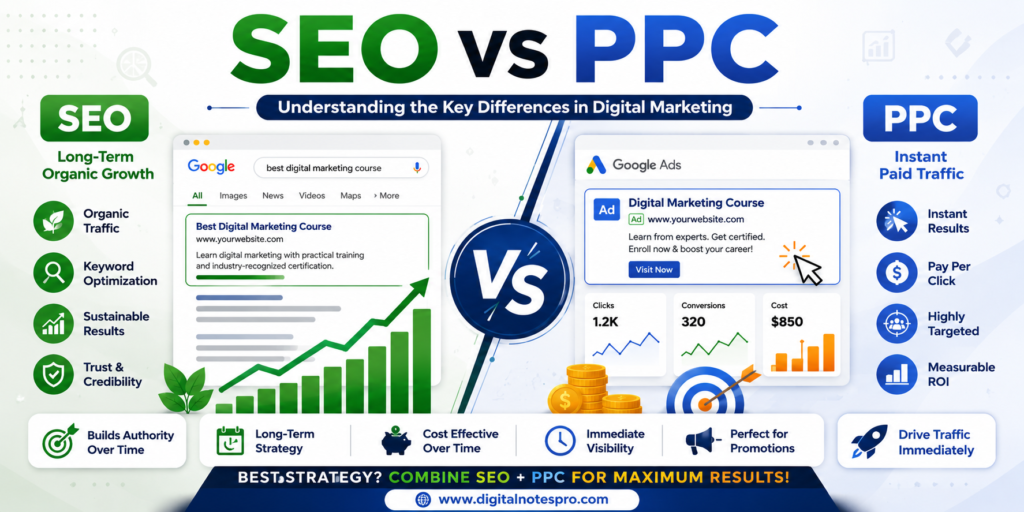
The competition in the digital world is fierce and companies need proper means for acquiring new clients through online platforms. SEO ( Search Engine Optimization ) and PPC ( Pay Per Click ) are two successful digital marketing methods . Both processes are used to get users to a website by means of search engines. However, they are totally different in their working.
SEO’s and entrepreneurs often ask a question: what is the difference between SEO and PPC? Which technique should I choose?
It depends on so many factors like your marketing goal, your budget, your time etc. Learn the main difference between SEO and PPC in this article.
What is SEO?
SEO (Search Engine Optimization) can be described as the process by which a website is optimized in order to enhance its visibility through search engines.
The main aim of SEO is to increase the ranking of the site on search engines such as Google, Bing, and Yahoo. This is accomplished through:
- Keyword optimization
- High-quality content creation
- Technical SEO improvements
- Link building
- User experience optimization
- Mobile responsiveness
Example of SEO
Search for “best digital marketing course” and clicking on a result that appears naturally below the ads, then that traffic is generated via SEO.
Benefits of SEO
- Free organic traffic
- Long-term results
- Builds credibility and trust
- Higher click-through rates
- Better user experience
- Sustainable lead generation
Challenges of SEO
- Takes time to show results
- Requires ongoing optimization
- High competition for popular keywords
- Algorithm updates can affect rankings
What is PPC?
PPC (pay-per-click) is an advertising model on the Internet where the advertiser pays for each click on their ad.
Google Ads is the most popular PPC platform, but you can also run PPC campaigns on:
- Bing Ads
- Facebook Ads
- Instagram Ads
- LinkedIn Ads
- YouTube Ads
PPC enables companies to bid on keywords and buy placements at the top of search engine results pages (SERPs).
Example of PPC
When you search for “buy running shoes online,” the sponsored listings at the top are PPC advertisements.
Benefits of PPC
- Instant visibility
- Immediate traffic
- Highly targeted audience
- Measurable results
- Flexible budgeting
- Ideal for promotions and product launches
Challenges of PPC
- Requires ongoing investment
- Traffic stops when ads stop
- Cost per click can be expensive
- Competitive industries require larger budgets
Difference Between SEO and PPC
1. Cost
SEO
SEO does not require payment for each click. However, businesses invest in content creation, SEO tools, and optimization efforts.
PPC
Every click costs money. The amount varies depending on keyword competition and industry.
Winner: SEO for long-term cost efficiency.
2. Speed of Results
SEO
SEO can take several months to achieve significant rankings and traffic.
PPC
Ads can appear on the first page of Google within hours after campaign launch.
Winner: PPC for immediate results.
3. Traffic Sustainability
SEO
Organic traffic can continue even if you pause optimization efforts.
PPC
Traffic disappears as soon as the advertising budget runs out.
Winner: SEO for sustainability.
4. Credibility and Trust
Many users trust organic search results more than paid advertisements.
SEO rankings often signal authority and expertise.
PPC ads are clearly labeled as sponsored content.
Winner: SEO for credibility.
5. Click-Through Rate (CTR)
Studies consistently show that organic listings receive more clicks than paid ads for informational searches.
However, PPC can achieve higher CTRs for transactional keywords.
Winner: Depends on search intent.
6. Targeting Capabilities
SEO
Targets users through keywords and content relevance.
PPC
Allows targeting based on:
- Location
- Age
- Gender
- Device
- Interests
- Search behavior
Winner: PPC for advanced targeting.
7. Return on Investment (ROI)
SEO also tends to be equipped with a higher ROI over time as traffic continues without paying for each click.
PPC can give outstanding ROI if you optimize campaigns properly and requires ongoing spend.
Winner: SEO for long-term ROI.
SEO vs PPC Comparison Table
| Feature | SEO | PPC |
| Cost Per Click | Free | Paid |
| Results Speed | Slow | Immediate |
| Long-Term Value | High | Low |
| Trust Factor | High | Medium |
| Traffic Sustainability | Excellent | Temporary |
| Targeting Options | Limited | Advanced |
| Budget Requirement | Moderate | Flexible |
| ROI Over Time | High | Medium |
When Should You Choose SEO?
SEO is ideal when:
- You want long-term traffic growth.
- You have a limited advertising budget.
- You want to build brand authority.
- Content marketing is part of your strategy.
- You’re targeting informational keywords.
Best for:
- Blogs
- Educational websites
- Service businesses
- Local businesses
- SaaS companies
When Should You Choose PPC?
PPC is the better option when:
- You need immediate leads.
- You’re launching a new product.
- You want quick sales.
- You’re running seasonal promotions.
- You need highly targeted traffic.
Best for:
- E-commerce stores
- Event promotions
- Product launches
- Lead generation campaigns
- Competitive industries
Why Combining SEO and PPC Works Best
The most successful digital marketing strategies combine SEO and PPC rather than choosing one over the other.
How They Complement Each Other
Use PPC For:
- Immediate traffic
- Testing keywords
- Promotions
- Lead generation
Use SEO For:
- Long-term growth
- Brand authority
- Content marketing
- Sustainable traffic
Together, they create a balanced strategy that delivers both short-term and long-term results.
Common SEO and PPC Mistakes to Avoid
SEO Mistakes
- Keyword stuffing
- Duplicate content
- Ignoring mobile optimization
- Slow website speed
- Poor internal linking
PPC Mistakes
- Targeting broad keywords
- Not tracking conversions
- Ignoring negative keywords
- Poor landing page design
- Lack of ad testing
Conclusion
Understanding the difference between SEO and PPC is essential to creating an effective digital marketing strategy.
SEO is about getting organic traffic through optimization and content so , it is a cost-effective long term solution . PPC, on the other hand, gets you instant visibility and targeted traffic through paid ads.
If you want long term ROI and sustainable growth then SEO is the better option. If you want instant traffic, leads or sales, PPC is the way to go.
The best strategy for most businesses is to combine SEO and PPC to maximize visibility, drive quality traffic and get better marketing results.
FAQs
1. Which is better, SEO or PPC?
Neither is universally better. SEO is best for long-term growth, while PPC is ideal for immediate traffic and leads.
2. Is SEO cheaper than PPC?
Yes. SEO generally costs less over time because you don’t pay for each click, unlike PPC advertising.
3. Can SEO and PPC work together?
Yes. Combining SEO and PPC often produces the best results by covering both organic and paid search visibility.
4. How long does SEO take to show results?
SEO typically takes 3–6 months, depending on competition, website authority, and optimization efforts.
5. Is PPC good for small businesses?
Yes. PPC can generate targeted leads quickly and allows businesses to control their advertising budget effectively.