The way businesses engage with their clients has been changed completely by digital marketing. In the digital marketing world, small local businesses, as well as large multinational companies, will need to know what kinds of digital marketing exist to make it easier for them to grow because most of the world wide web is driven by digital marketing today than ever before.
Digital marketing is not just one thing; digital marketing consists of a variety of techniques, strategies, and channels utilized by different companies to attract, convert, and engage their target audience.
In this article, we’ll explore the types of digital marketing explained with examples, so you can clearly understand how each method works and when to use it.
What is Digital Marketing?
Digital marketing refers to promoting products, services, or brands using online channels such as search engines, social media, email, websites, and mobile apps.
Unlike traditional marketing, digital marketing allows businesses to:
- Target specific audiences
- Measure performance in real time
- Optimize campaigns instantly
- Reach global customers at lower costs
Now let’s break down the major types.
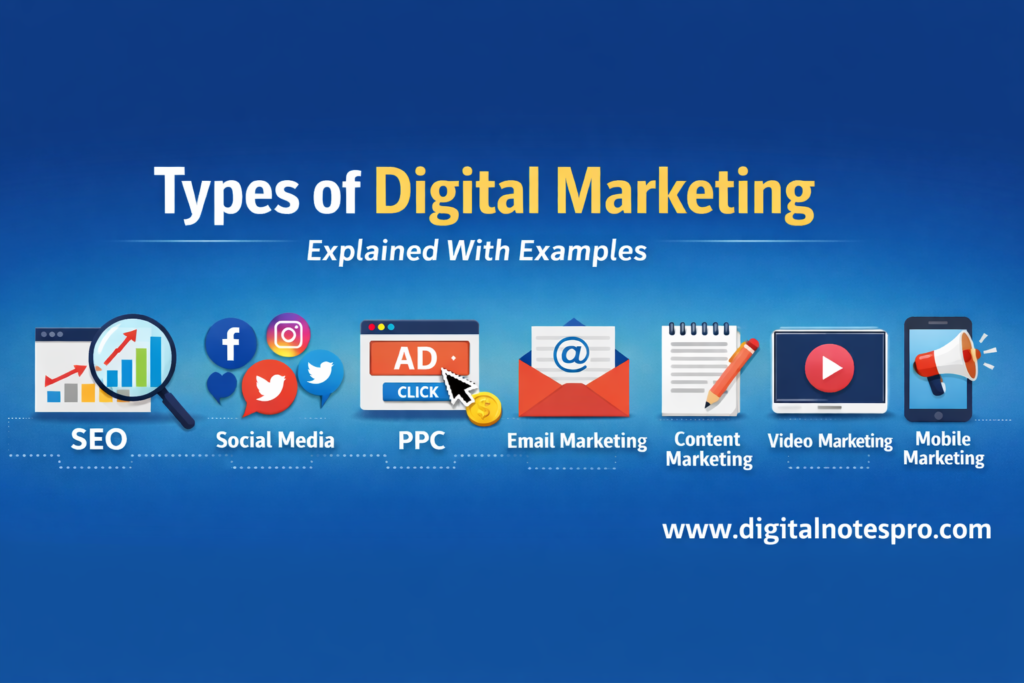
1. Search Engine Optimization (SEO)
SEO is the technique of enhancing a site’s ranking/position within search engines such as Google through organic (non-paid) searches. An established SEO strategy supports your biz by making your site easier to find when people look for products/services relevant to your business.
Example:
If you own a shoe store and someone searches “best casual shoes for men”, SEO helps your website rank on the first page.
SEO includes:
- Keyword optimization
- Technical improvements
- Content creation
- Link building
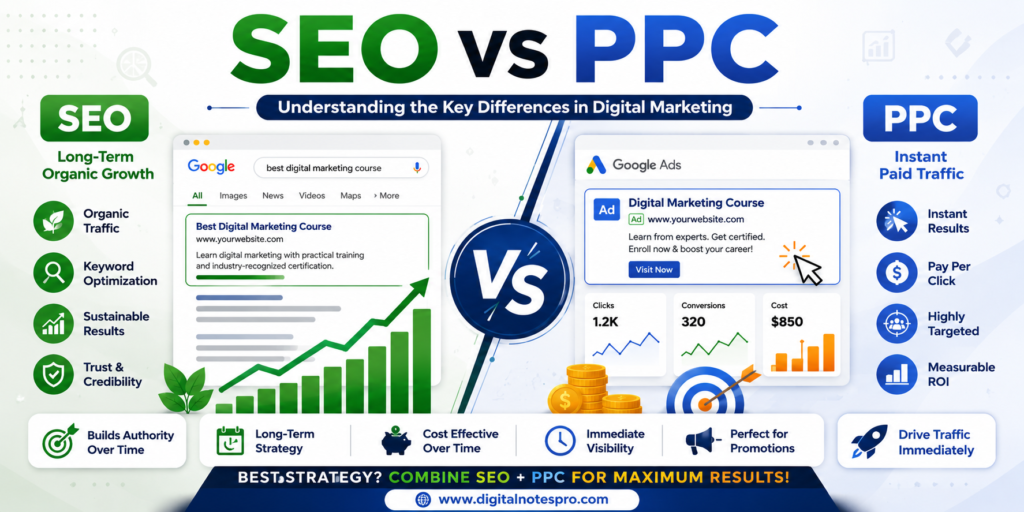
SEO is a long-term strategy but delivers highly targeted traffic.
2. Search Engine Marketing (SEM) / Paid Advertising
Search Engine Marketing involves paid ads that appear in search engine results.
Unlike SEO, which takes time, SEM gives immediate visibility.
Example:
A new online clothing brand runs Google Ads targeting “buy summer dresses online”. Their ad appears above organic results.
Common SEM formats:
- Search ads
- Display ads
- Shopping ads
- Video ads
SEM is ideal when businesses need quick results.
3. Social Media Marketing (SMM)
Social Media Marketing uses platforms like Instagram, Facebook, LinkedIn, and Twitter to promote brands, build awareness, and engage audiences.
Social media is powerful because people spend hours daily on these platforms.
Example:
A café posts attractive food photos on Instagram, runs ads for nearby users, and gains more foot traffic.
SMM includes:
- Organic posts
- Paid ads
- Reels & videos
- Community engagement
It’s excellent for brand visibility and customer interaction.
4. Content Marketing
Content marketing focuses on creating valuable and informative content to attract and educate potential customers.
Instead of direct selling, businesses build trust through helpful information.
Example:
A fitness brand publishes blog articles like “Best Home Workout Tips” to attract health-conscious readers.
Content types include:
- Blog posts
- Videos
- Infographics
- Guides
- Case studies
Good content drives traffic, improves SEO, and builds authority.
5. Email Marketing
Email marketing remains one of the most effective digital marketing strategies for nurturing leads and retaining customers.
It allows personalized communication.
Example:
An eCommerce store sends discount emails to previous buyers and increases repeat sales.
Email campaigns may include:
- Promotional offers
- Newsletters
- Product updates
- Abandoned cart reminders
Despite being old-school, email marketing delivers high ROI.
6. Affiliate Marketing
Affiliate marketing involves partnering with individuals or websites who promote your product and earn a commission per sale.
It’s performance-based marketing.
Example:
A tech blogger promotes a laptop through a referral link. When readers purchase, the blogger earns a commission.
Affiliate marketing benefits:
- Low upfront cost
- Pay only for results
- Wider reach
This strategy is widely used in eCommerce and SaaS industries.
7. Influencer Marketing
Influencer marketing leverages social media personalities with dedicated followers to promote products.
It works because audiences trust influencers.
Example:
A skincare brand collaborates with a beauty influencer who reviews their product on Instagram.
Influencer campaigns can generate:
- Brand awareness
- Credibility
- Rapid visibility
Micro-influencers often deliver better engagement than celebrities.
8. Pay-Per-Click Advertising (PPC)
PPC is a model where advertisers pay only when users click their ads.
It’s commonly associated with Google Ads but applies across platforms.
Example:
A coaching institute runs PPC ads targeting “digital marketing course near me” and receives inquiries.
Advantages:
- Fast results
- Highly measurable
- Budget control
PPC is excellent for lead generation.
9. Video Marketing
Video marketing uses visual content to educate, entertain, or promote products.
Video content has higher engagement rates compared to text.
Example:
A smartphone brand uploads product demonstration videos on YouTube.
Video formats include:
- Tutorials
- Product demos
- Testimonials
- Short-form videos
With the rise of reels and shorts, video marketing is more important than ever.
10. Mobile Marketing
Mobile marketing targets users via smartphones using:
- SMS campaigns
- Mobile apps
- Push notifications
- Mobile ads
Example:
A food delivery app sends push notifications offering discounts during lunch hours.
Since most users browse on mobile devices, this channel is highly effective.
11. Marketing Automation
Marketing automation uses software tools to automate repetitive marketing tasks.
Example:
A website automatically sends welcome emails when users sign up.
Automation helps with:
- Lead nurturing
- Email sequences
- Customer segmentation
- Behavioral targeting
It improves efficiency and personalization.
Why Businesses Need Multiple Types of Digital Marketing
Relying on just one channel is risky.
Successful brands combine strategies.
For instance:
- SEO for long-term traffic
- Social media for engagement
- PPC for quick leads
- Email marketing for retention
Digital marketing works best as an integrated system.
How to Choose the Right Digital Marketing Strategy
Not every strategy suits every business.
Your selection depends on:
- Business goals
- Target audience
- Budget
- Industry type
Example:
A local salon benefits more from social media marketing and Google Ads than global SEO.
A B2B company may focus on LinkedIn marketing and email campaigns.
Conclusion
Understanding the different types of digital marketing through examples will help companies develop sound marketing strategies. Companies aren’t just trying to keep up with trends — when considering which channels to use, they need to choose the right combination of channels for their specific goals. Therefore, no matter what type of digital marketing you are looking for — whether you are trying to build your brand, generate traffic or sell products — there are several types of digital marketing tools available to help you accomplish that.